Why visit Bulla Regia
Why visit Bulla Regia
Rooms built below the ground, on purpose
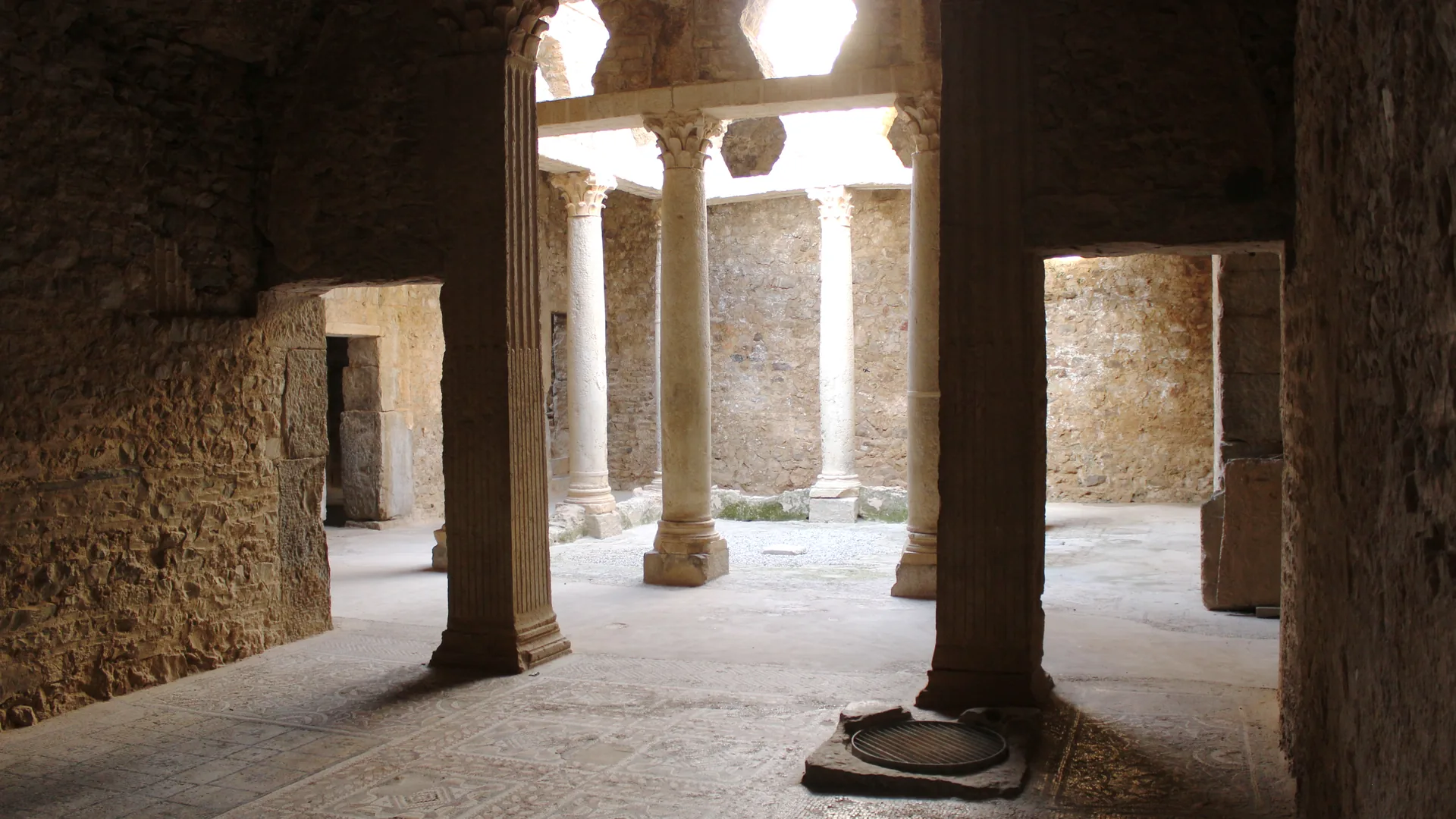
Most Roman towns built up. Bulla Regia's wealthy residents built down — sinking entire lower storeys of their villas underground, arranged around two-storey atriums, to escape the fierce Tunisian summer heat. Sprinkled water on the stone floors added evaporative cooling. It's one of the most distinctive pieces of Roman domestic engineering anywhere in the empire.
Mosaics still on the floor where they were laid
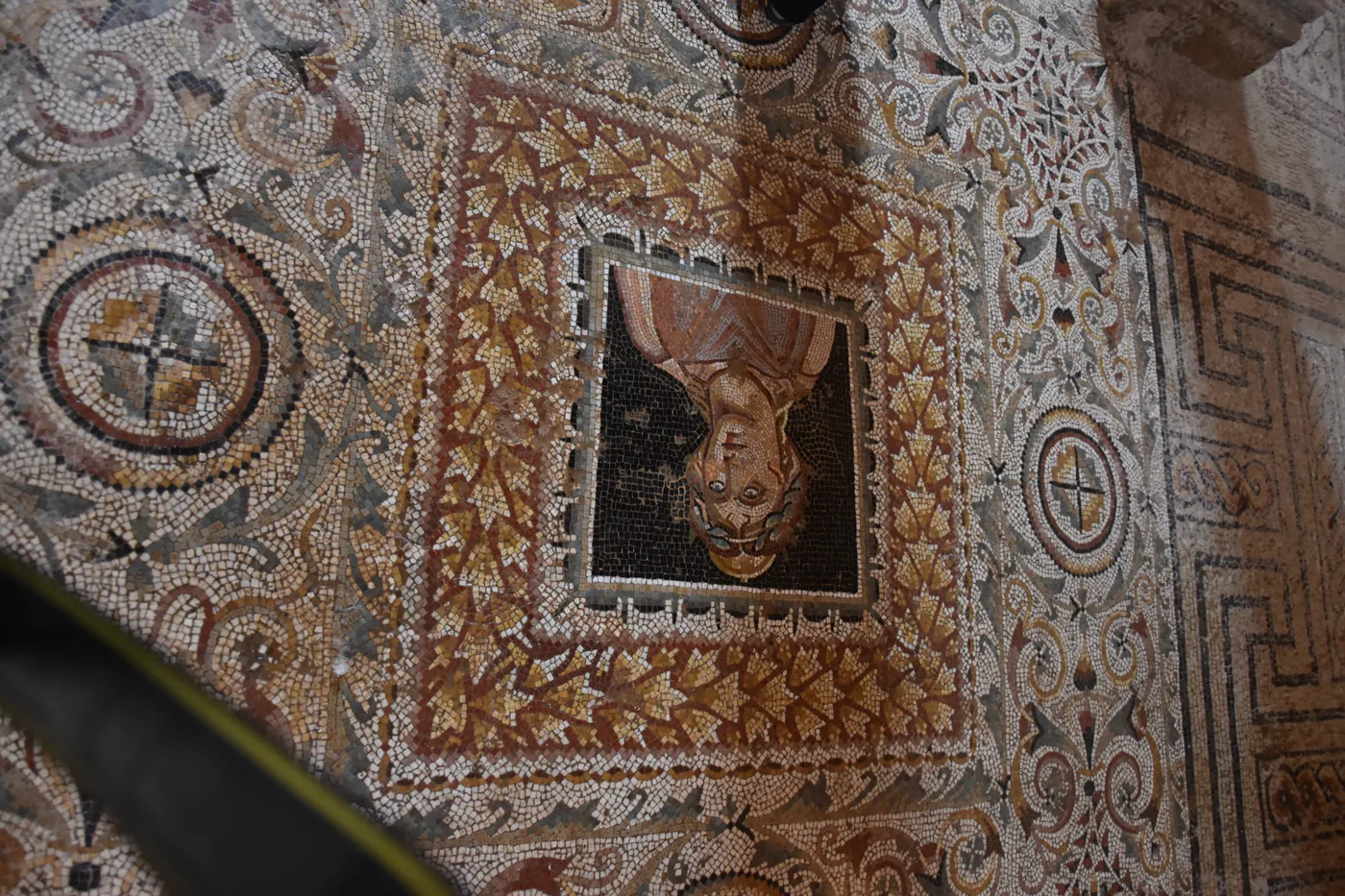
Because the underground rooms were naturally protected, many of Bulla Regia's mosaics survive in situ — not lifted to a museum, but still on the floor of the room they were made for. The House of the Hunt and the House of Amphitrite, with its haloed sea-goddess mosaic, are the standout examples.
A full Roman town above ground too
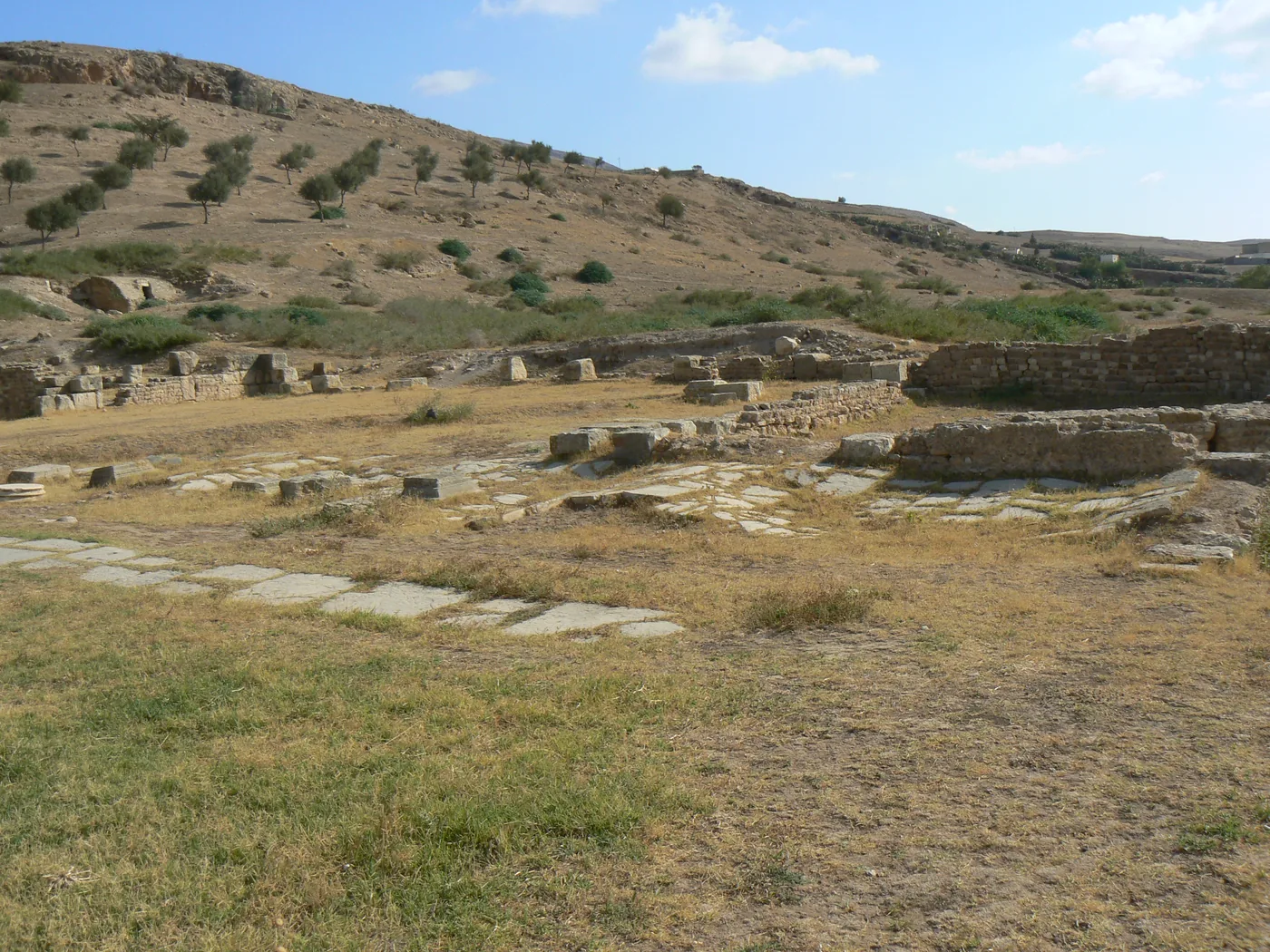
Bulla Regia isn't only the underground villas — a forum ringed with porticoes, a theatre, an amphitheatre only fully excavated in the 1960s, and a temple complex from the era of Septimius Severus all survive above ground, tracing the town's rise from Numidian capital under Masinissa to Roman colonia.
What to see at Bulla Regia
What to see at Bulla Regia
The underground villas are the reason to come; the surface ruins fill out the rest of the town's story. These are the things to look for.
- House of the Hunt
The underground showpiece
A basilica-style underground villa with an apse and transept-like layout — one of Bulla Regia's two signature subterranean houses, and a striking demonstration of how far Romans here went to beat the heat.
- House of Amphitrite
The mosaic sea-goddess
Named for its exceptional in-situ mosaic of a haloed Amphitrite, this underground villa is Bulla Regia's most photographed interior — genuinely underground rooms with original Roman floors intact.
- The forum
The civic square
Excavated in the early 1950s, the porticoed forum was the working centre of the town, and shows Bulla Regia's status as a full Roman colonia under Hadrian.
- The amphitheatre
Buried, then rediscovered
Only fully excavated in 1960–61, the amphitheatre retains crisp architectural detail thanks to the centuries it spent buried and protected.
- The theatre
Civic culture above ground
Bulla Regia's theatre reflects the same civic ambition seen across Roman North Africa — a public building serving a town that could clearly afford one.
- Temple complex
Severan-era religion
A temple complex dating to the reign of Septimius Severus preserves intricate mosaics and opus sectile decoration, evidence of the town's continued wealth into the 3rd century AD.
The day trip from Tunis
The day trip from Tunis
Bulla Regia sits in inland Tunisia near Jendouba, so almost everyone visits on a guided day trip — here's how it works.
About 2.5 hours from Tunis
Bulla Regia is a longer drive than some Tunisian day trips, which is why nearly every tour combines it with Dougga, about 45 minutes away, to make the distance worthwhile.
Almost always paired with Dougga
The best-rated tours bundle Bulla Regia's underground villas with Dougga's intact hilltop Roman town — two very different kinds of Roman archaeology in a single day, often via the scenic Andalusian town of Testour.
What tours include
Day trips generally bundle round-trip private transport from Tunis or Hammamet, a guide, and entrance fees; many include a traditional lunch in Dougga. Check exactly what your chosen option includes when you book.
On site
The underground rooms mean steps and sometimes low light, so wear sturdy shoes — but the descent itself is short and easy, and the payoff (walking on original Roman mosaic floors) is worth it.
Bulla Regia, in pictures
Bulla Regia, in pictures
The underground villas and surface ruins of Bulla Regia, near Jendouba.
Tour options & what's included
Tour options & what's included
| Option | What it includes | Good to know |
|---|---|---|
| Private Bulla Regia + Dougga tour | Private transport, guide, entrances, lunch | Top-rated, the standard way to see both |
| VIP day tour via Testour | Adds the Andalusian town of Testour, pickup | A fuller day with more stops |
| Bulla Regia + Dougga, no lunch | Transport, guide, entrances only | Good if you'd rather eat elsewhere |
| Kairouan, Makthar & Dougga combo | Adds further Roman & Islamic heritage sites | For travellers wanting more of inland Tunisia |
Ways to visit Bulla Regia
Find a Bulla Regia tour for your dates
Every option below is bookable through GetYourGuide, with live availability and the final price shown in your own currency before you pay.
Planning your visit
Planning your visit
Pair it with Dougga
Almost every bookable tour combines Bulla Regia's underground villas with Dougga's hilltop town, about 45 minutes apart — together they show two completely different sides of Roman Tunisia.
Wear sturdy shoes for the descent
Getting into the underground rooms means a short flight of steps and sometimes low light — nothing strenuous, but comfortable footwear helps.
Look down, not just around
The whole point of Bulla Regia is what's underfoot — the in-situ mosaics in the House of Amphitrite and House of the Hunt are the highlight, so take your time in the underground rooms rather than rushing through.
Go with a guide
The engineering logic behind building underground, and the site's long arc from Numidian capital to Roman colonia, are easy to miss without context — a guide connects the underground villas to the surface ruins.
Booking flexibility
Listings typically offer free cancellation up to 24 hours before, so you can lock in a departure and adjust later if your Tunis plans change.
Planning a Bulla Regia day from Tunis
Planning a Bulla Regia day from Tunis
Visiting Bulla Regia from Tunis: the underground villas and what to see
The drive, why the houses were built underground, and how to plan your day at one of Roman Tunisia's strangest and most rewarding sites.
Read more → UNDERGROUND ARCHITECTUREBulla Regia's Underground Villas: A House-by-House Guide
A closer look at how Bulla Regia's underground villas were lit and cooled, and what sets the House of the Hunt, Amphitrite, Fisherman and Peacock apart.
Read more → MOSAICS IN PLACEBulla Regia's Mosaics: Still on the Floor, Not in a Museum
Bulla Regia's underground rooms kept mosaics that never left the floor — here's the Amphitrite mosaic, what moved to the Bardo, and why the setting matters.
Read more → TOWN HISTORYBulla Regia's Story: Numidian Capital to Roman Colonia
From a Numidian royal town named for its status, through Roman colonia and Christian bishopric, to a slow medieval fade — Bulla Regia's history in one guide.
Read more → ABOVE GROUNDBeyond the Villas: Bulla Regia's Baths, Theatre and Temples
The underground villas get the fame, but Bulla Regia's forum, Memmian Baths, theatre and two temples show it was a fully working Roman town above ground too.
Read more → TRIP PLANNINGReaching Bulla Regia: Routes from Tunis, Jendouba, Tabarka
Bulla Regia sits inland near Jendouba — here's how the drive works from Tunis, Tabarka and Chemtou, and how travellers usually combine it with Dougga.
Read more →GEO/FAQ
Bulla Regia visit questions
What is Bulla Regia?
Bulla Regia is a Roman archaeological site near Jendouba, Tunisia, famous for villas with entire lower storeys built underground — a response to the intense North African summer heat. Originally a Punic-controlled Berber settlement and later a Numidian capital under Masinissa, it became a Roman colonia under Hadrian (formally Colonia Aelia Hadriana Augusta Bulla Regia) and declined under Byzantine rule.
Why were the houses built underground?
Bulla Regia's wealthier residents built the lower level of their villas below ground, arranged around two-storey atriums, as a form of climate control — sprinkling water on the stone floors added evaporative cooling, keeping the rooms comfortable through brutal summer heat.
How do I get there from Tunis?
Bulla Regia is about 2.5 hours from Tunis. There's no simple public-transport route for visitors, so almost everyone goes on a guided day trip, nearly always combined with Dougga, roughly 45 minutes away.
Is it worth the day trip?
If you're interested in Roman engineering or want to see genuinely unusual archaeology, yes — the underground villas with in-situ mosaics are unlike almost any other Roman site. Pairing it with Dougga's intact hilltop town makes for a genuinely varied day.
What will I see there?
The highlights are the underground House of the Hunt and House of Amphitrite (with its mosaic sea-goddess), the forum, the theatre, an amphitheatre only fully excavated in 1960–61, and a temple complex from the Severan era.
Can I combine Bulla Regia with other sites?
Yes — the most popular bookable tours combine Bulla Regia with Dougga, and some longer options add the Andalusian town of Testour or further Roman and Islamic heritage sites. Each option's inclusions and live price are shown in the booking widget.